What Are the Different Types of Solar Water Pumps?
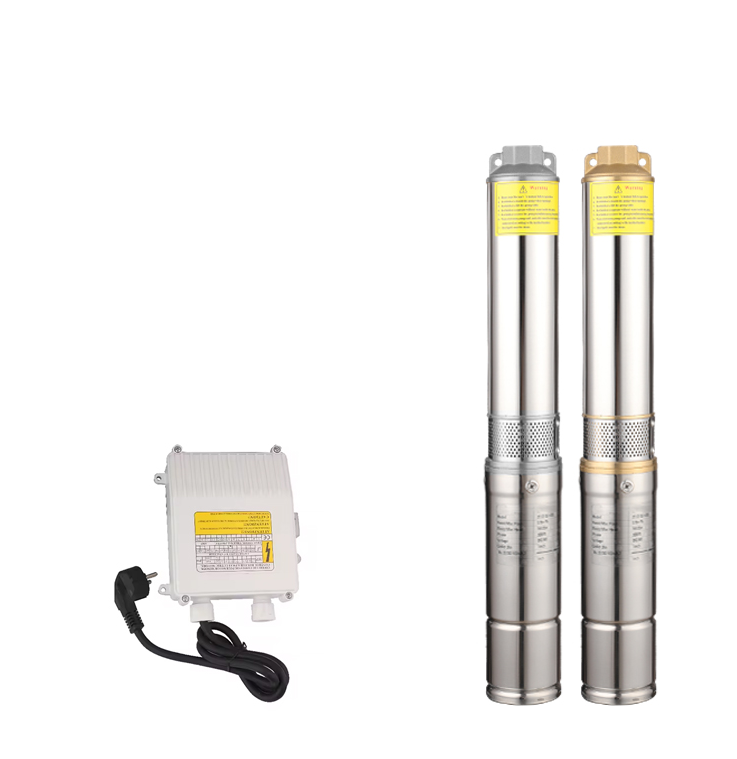
Solar water pumps come in several types, each suited for specific water sources, installation conditions, and flow requirements. The two most common categories are the submersible pump and the surface pump, both of which operate on solar-generated electricity. Submersible solar pumps are installed deep underground inside boreholes or wells. They are ideal for water extraction from deep wells, boreholes, agricultural irrigation pits, and underground reservoirs. These pumps are highly efficient because they push water upward rather than pull, reducing suction losses.
Surface solar pumps, on the other hand, are installed above the water source. They are typically used for shallow wells, rivers, ponds, water tanks, and small irrigation networks. They are easy to install and maintain but are not suitable for deep water lifting.
A third popular category is the Solar AC&DC pump system. These pumps can run on both AC and DC power. During sunny hours, they operate on solar power; when solar input drops, they can switch to grid power or a generator. This hybrid feature makes them suitable for large farms, commercial irrigation, or areas requiring consistent water flow.
Finally, pump systems may also be classified by motor type: DC solar pumps (higher efficiency, direct solar operation) and AC solar pumps (powered via an inverter). Each type fits different budgets and performance requirements, ensuring broader application flexibility.
How Deep Can a 1 HP Solar Pump Draw Water From?
A 1 HP solar water pump is one of the most popular sizes for domestic use, agriculture, and small-scale irrigation. Its depth capability depends heavily on whether it is a submersible pump or a surface pump. Generally, a 1 HP submersible solar pump can lift water from depths of 150–250 feet (45–75 meters). This depth range is suitable for most domestic boreholes and small agricultural wells.
Submersible pumps are more efficient at lifting deep water because they push water upward. They also maintain stable output even when the water level fluctuates. A properly sized solar array—usually 800W to 1,200W—ensures consistent operation throughout the day.
Surface pumps, however, cannot draw water from deep levels. A 1 HP surface-type solar pump can only lift water from a suction depth of 20–25 feet (6–8 meters) because atmospheric pressure limits suction capability. These pumps are best for shallow rivers, ponds, or water tanks.
Environmental conditions also matter. Regions with strong sunlight allow solar water pumps to run at maximum performance. Cloudy regions may reduce pumping depth or flow unless extra solar panels are added. In conclusion, a 1 HP solar pump can achieve significant depth, especially when designed as a submersible pump, making it ideal for most rural and residential applications.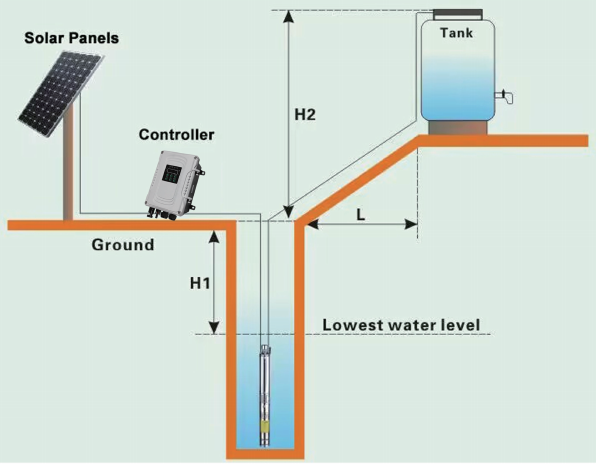
What Are the Three Types of Water Pumps?
Water pumps—whether solar-powered or electric—are commonly classified into three major categories: submersible pumps, surface pumps, and centrifugal pumps (including multistage pumps). Each category serves different installation environments and water-lifting requirements.
1. Submersible Pumps
These are installed fully underwater—inside wells, boreholes, or reservoirs. Submersible pumps are efficient for deep water lifting because the pump pushes water upward. Submersible solar water pumps are popular for boreholes, deep wells, and long-distance agricultural irrigation. They are the best option when the water table is deep.
2. Surface Pumps
Surface pumps stay above the water source, drawing water through suction. They are ideal for shallow wells, household water supply, garden irrigation, and livestock watering. They are easy to install but cannot lift water from deep levels.
3. Centrifugal Pumps
Centrifugal pumps move water using rotational energy from an impeller. They exist in both surface and submersible designs. Single-stage centrifugal pumps are common for domestic use, while multistage centrifugal pumps are used for high-pressure applications like drip irrigation or long-distance water transfer.
Solar water pump systems often combine these types with DC or AC motors, creating flexible solutions for different markets and climates. Understanding these pump categories helps buyers choose the correct option for their depth, pressure, and flow requirements.
What Is the Difference Between AC and DC Solar Pumps?
Solar water pumps operate using either AC motors or DC motors, and the differences between them significantly affect performance, cost, and application suitability.
DC Solar Pumps
DC solar pumps run directly on the DC power produced by solar panels. They are known for:
Higher efficiency (up to 90%)
Low starting current, useful during weak sunlight
Less heat and longer motor life
No inverter required, reducing system cost and energy loss
DC pumps are mostly used for domestic water supply, small farms, livestock watering, and submersible borehole applications.
AC Solar Pumps (with inverter)
AC solar pumps use an inverter to convert DC power from solar panels into AC electricity. Their advantages are:
Higher power range (1HP–50HP)
Suitable for large irrigation systems
Compatibility with existing electric pumps
More robust for heavy-duty water transfer
The downside is that AC solar pumps have lower overall efficiency due to conversion losses, and the system cost is higher because of the inverter.
Solar AC&DC Pump Systems
These hybrid systems combine the benefits of both AC and DC. They run on solar power during the day and automatically switch to grid/generator power when sunlight is insufficient. This ensures 24/7 water availability.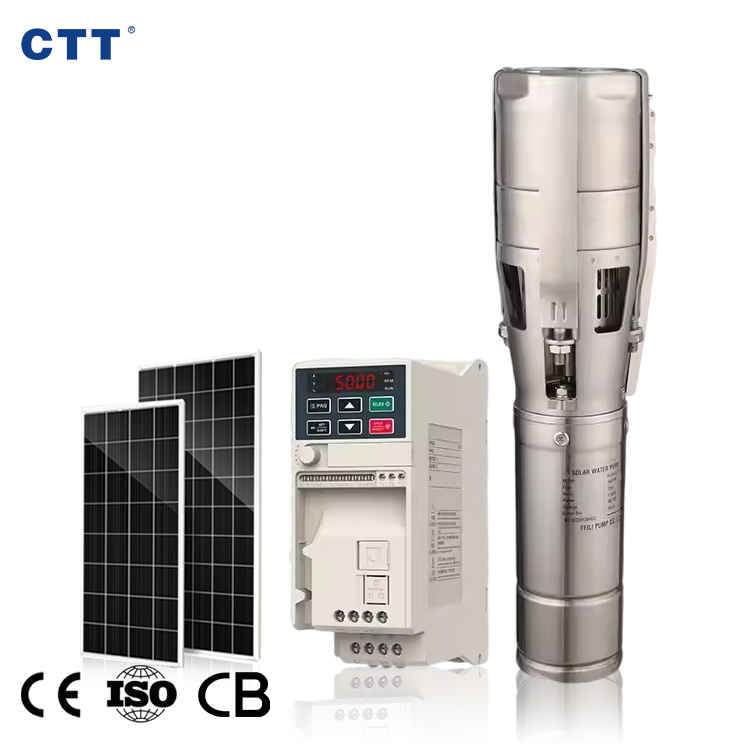
Conclusion
Solar water pumps are available in several types—submersible pumps, surface pumps, and Solar AC&DC pump systems—each designed for different depth and flow requirements. Submersible pumps provide deep borehole performance, while surface pumps are ideal for shallow water sources. Understanding pump categories, depth limits, and AC vs. DC operation helps buyers select the right pump for agriculture, domestic water use, and rural supply.