To what height can a solar-powered water pump raise water?
When water fails to reach the required height, farms dry, households struggle, and projects fail—solar-powered water pumps solve this effectively.
**A solar-powered water pump can raise water up to 200–300 meters, depending on pump design, total dynamic head (TDH), and solar power capacity. Proper sizing ensures efficiency and long-term reliability.**
Keep reading to understand the key factors that determine water lifting height.
—
## How to choose a suitable solar-powered water pump for a deep well?
Selecting the right solar-powered water pump—or more specifically, a solar-powered deep well pump—is critical for efficient water delivery. The first factor to consider is the well depth. A shallow borehole pump may not provide enough lifting capacity, while a deep well pump is designed to handle depths exceeding 100 meters. The next consideration is water demand: estimate the daily volume required for irrigation, livestock, or domestic use.
Power supply is equally important. Solar-powered borehole pumps require properly sized solar panels to deliver sufficient wattage during peak sunlight hours. Undersized panels lead to insufficient pumping, while oversized systems waste investment. Pump efficiency, motor type (AC or DC), and controller compatibility also influence performance.
Buyers should also evaluate brand reliability, after-sale service, and availability of spare parts. For wholesale distributors and service providers, choosing pumps from trusted manufacturers like ctt ensures stable pricing and consistent quality. Finally, consider the local market demand—distributors in regions like Africa or Southeast Asia often benefit from solar-powered water pumps designed specifically for off-grid rural applications.
—
## What is TDH?
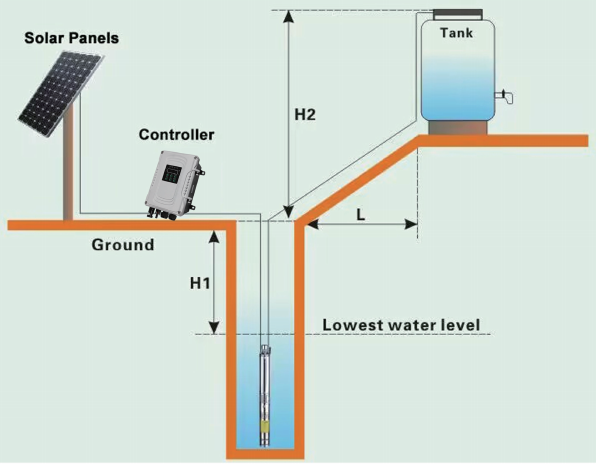
TDH, or Total Dynamic Head, is the single most important factor in determining how high a solar-powered water pump can raise water. It is the total measurement of resistance the pump must overcome to move water from the source to the discharge point. TDH includes vertical lift (the static water level to the surface), drawdown depth (the level water falls to during pumping), and all friction losses in pipes, fittings, and filters.
For example, if a well has a water level at 80 meters, and water must be pushed another 20 meters to a storage tank, the static head is 100 meters. If the pipeline adds 10 meters of resistance due to bends and fittings, the TDH becomes 110 meters. This calculation directly determines whether a solar-powered deep well pump can perform effectively.
Distributors and wholesalers should educate their buyers on TDH, as mismatched pumps lead to poor performance, frequent breakdowns, and dissatisfied customers. Manufacturers like ctt provide technical support in calculating TDH, ensuring clients select the right solar-powered borehole pump for their projects. By correctly assessing TDH, businesses reduce costly returns and strengthen their reputation in competitive markets.
—
A solar-powered deep well pump can reliably lift water when matched to correct TDH.