
Can a Submersible Pump Run Continuously?
A submersible pump can run continuously, but only if it is designed for continuous-duty operation and properly protected. Most industrial and agricultural submersible pumps are rated for long working hours; however, continuous operation depends on several factors, including motor cooling, water availability, and electrical stability.
Submersible pumps rely on surrounding water for cooling. If the water level drops too low, the motor may overheat and fail. Continuous operation without dry-run protection is one of the most common causes of pump burnout. This is especially critical in solar water pumps, where water supply and sunlight conditions can fluctuate during the day.
Without a VFD inverter, the pump runs at full speed whenever it is powered on. This constant full-load operation increases mechanical stress, hydraulic shock, and energy consumption. Pressure surges during startup can also damage pipelines and valves.
When a pump must operate for long hours, protection devices such as thermal overload relays, level sensors, and controllers are essential. In Solar AC&DC pump systems, intelligent controllers regulate startup and shutdown to avoid excessive stress. While continuous operation is possible without a VFD, it requires careful system design and strict protection measures.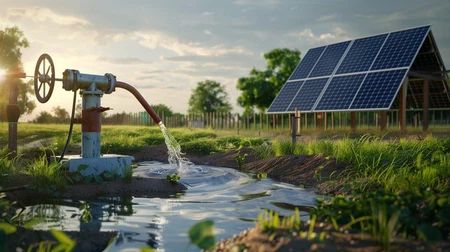
What Is the Purpose of VFD in Pumps?
The primary purpose of a VFD inverter (Variable Frequency Drive) in pump systems is to control motor speed by adjusting frequency and voltage. This allows the pump to operate at variable speeds instead of running at full capacity all the time. In water pumping systems, this results in better pressure control, reduced energy consumption, and longer equipment life.
One of the biggest advantages of using a VFD is soft starting. Instead of a sudden high inrush current during startup, the VFD gradually accelerates the motor. This reduces electrical stress on the motor windings and mechanical stress on couplings, bearings, and pipes.
VFDs also improve energy efficiency. According to pump affinity laws, reducing speed slightly can significantly lower power consumption. In systems with variable demand—such as irrigation or domestic water supply—a VFD can generate substantial energy savings.
However, in solar water pumps, traditional VFDs are not always used. Solar pump controllers often integrate MPPT technology, soft start, and speed regulation functions similar to a VFD. For Solar AC&DC pump systems, a VFD inverter may be combined with a solar inverter to optimize performance under varying solar conditions.
Can a Submersible Pump Work Without a Control Box?
Yes, a submersible pump can work without a control box, but this depends on the motor type and application. Small single-phase submersible pumps usually require a control box that contains capacitors, relays, and overload protection. Without it, the motor cannot start or will quickly overheat.
Three-phase submersible pumps, on the other hand, can technically run without a control box if they are connected to a properly protected power supply. However, this is not recommended. The control box provides essential protection functions such as overload protection, phase loss detection, and voltage imbalance protection.
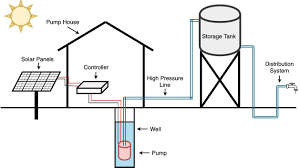
In solar water pumps, the control box is replaced by a solar controller, which performs even more advanced functions. These controllers regulate voltage from solar panels, protect against dry running, and automatically stop the pump when sunlight is insufficient. In Solar AC&DC pump systems, the controller may also switch between solar and grid power automatically.
Operating a submersible pump without any control device significantly increases the risk of motor damage, unstable operation, and shortened service life. Even if a VFD is not used, a basic control box or controller is strongly recommended.
Can You Use a Water Pump Without a Controller?
Technically, a water pump can be connected directly to a power source and run without a controller, but this is risky and rarely recommended. Without a controller, the pump has no protection against dry running, voltage fluctuations, overload, or overheating.
In conventional electric systems, controllers monitor pressure, flow, and motor temperature. Without these protections, a pump may continue running even when there is no water, causing severe motor damage. Pressure spikes during startup and shutdown can also damage pipes and fittings.
In solar water pumps, operating without a controller is practically impossible. Solar panels produce fluctuating DC power depending on sunlight intensity. A controller is required to stabilize voltage and current before supplying power to the pump motor. Without it, the pump would experience unstable operation and immediate failure.
For Solar AC&DC pump systems, the controller also manages automatic switching between power sources. It ensures the pump runs smoothly regardless of whether power comes from solar panels or the grid.
While a pump may function briefly without a controller, long-term operation without proper control and protection leads to higher failure rates, increased maintenance costs, and reduced system reliability.
Operating a Submersible Pump Without a VFD: When Is It Acceptable?
Operating a submersible pump without a VFD inverter is acceptable in certain scenarios. Fixed-speed operation is common in systems with stable water demand, constant pressure requirements, and reliable power supply. Many traditional agricultural and industrial pumping systems have operated this way for decades.
However, even without a VFD, protection devices are still required. These include overload relays, level sensors, pressure switches, and controllers. In solar applications, specialized controllers replace the VFD’s role by regulating speed indirectly through power management.
For buyers focused on cost reduction, avoiding a VFD can lower initial investment. But for applications requiring variable flow, pressure control, or energy efficiency, a VFD becomes a valuable upgrade. The decision depends on usage patterns, power source, and system complexity.
Conclusion
Yes, it is possible to operate a submersible pump without a VFD inverter, but only when the system is properly designed and protected. While traditional fixed-speed operation works in many cases, VFDs improve efficiency, reduce mechanical stress, and extend pump lifespan. In solar water pumps and Solar AC&DC pump systems, intelligent controllers often replace VFDs by providing speed regulation and motor protection. Choosing the right configuration ensures safe, reliable, and cost-effective pump operation.


