How Do You Calculate the Size of a Pump for Irrigation?
Calculating the size of an irrigation pump begins with understanding two critical parameters: flow rate and total dynamic head (TDH). These determine the pump’s required capacity and pressure.
Flow Rate (Q):
This is the volume of water needed per unit of time, typically measured in cubic meters per hour (m³/h) or gallons per minute (GPM). It depends on the number of sprinklers, irrigation area, and crop water demand.Total Dynamic Head (TDH):
TDH is the total height the pump must lift water, including:Static Head: The vertical distance from the water source to the discharge point.
Friction Losses: Resistance caused by pipes, valves, and fittings.
Pressure Head: The pressure required for sprinklers or drippers to work efficiently.
The basic formula is:
Pump Head (H) = Static Head + Friction Loss + Pressure Head.
For example, if your static head is 15 m, friction loss is 5 m, and sprinkler pressure is 25 m, the pump head required is 45 meters.
Choosing a pump that matches or slightly exceeds this requirement ensures sufficient pressure while maintaining energy efficiency. Oversized pumps consume more power, while undersized ones fail to deliver adequate water.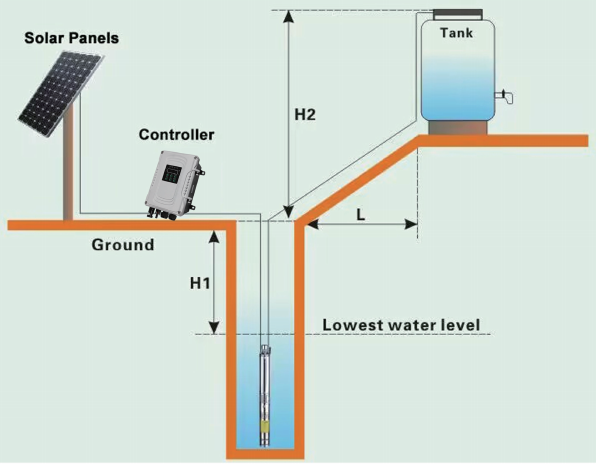
How to Choose the Right Irrigation Pump?
Selecting the right irrigation pump depends on the water source, system design, and the application environment. There are three main types commonly used: centrifugal pumps, submersible borehole pumps, and solar water pumps.
Centrifugal Pump:
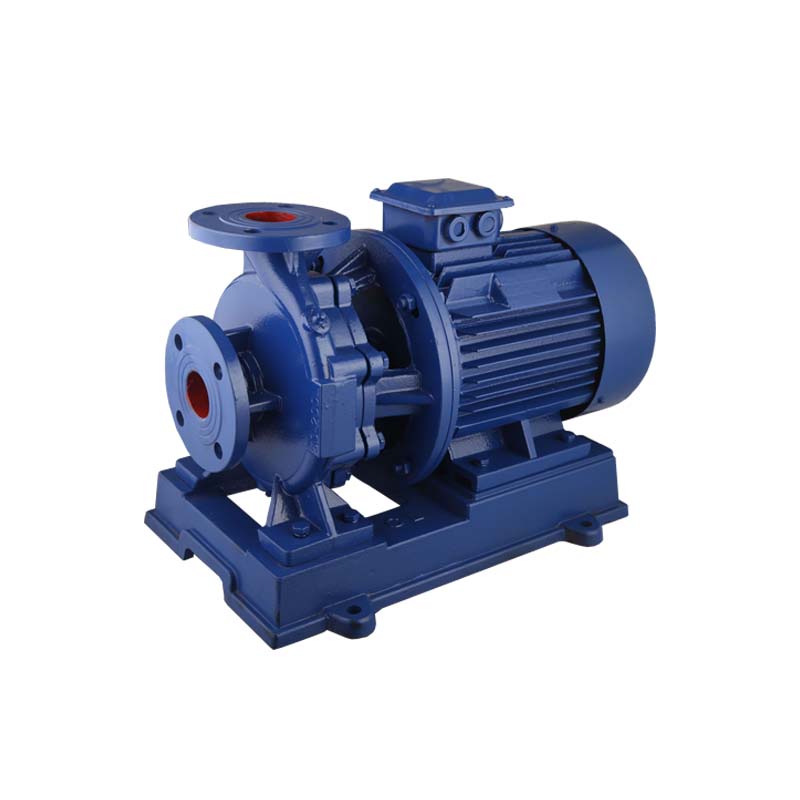
This is the most common type for surface irrigation. It operates by spinning an impeller that creates water pressure, pushing water through pipes. Ideal for shallow wells, rivers, or tanks, centrifugal pumps are known for easy installation and high flow rates.Submersible Borehole Pump:
Designed for deep wells or underground water sources, these pumps are fully submerged in water. They are efficient for deep irrigation wells because they push water upward rather than pulling it, minimizing energy loss.Solar Water Pump:
For off-grid areas or farms seeking sustainable energy solutions, solar-powered pumps are ideal. They use solar panels to generate electricity, significantly reducing long-term costs. Both solar submersible borehole pumps and solar centrifugal pumps are available depending on the depth of your water source.
When choosing the pump, consider:
Depth of water source (surface or deep well)
Required flow rate and pressure
Power source availability (electricity, diesel, or solar)
Water quality (clean or containing solids)
Selecting the right type ensures long-lasting performance, lower operational costs, and efficient irrigation throughout the season.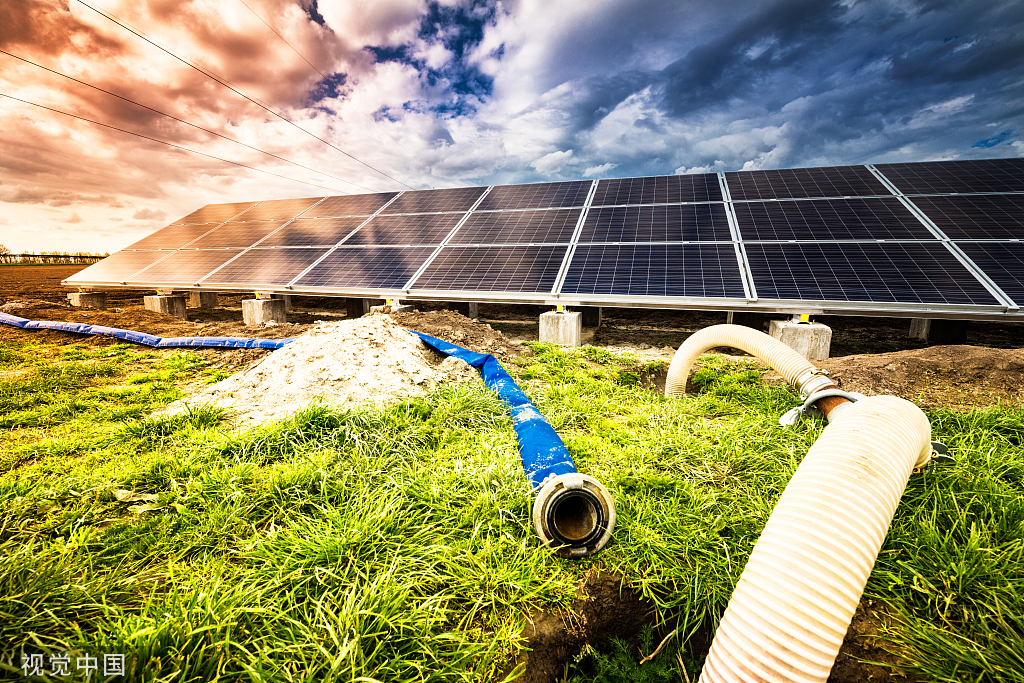
How Many Sprinklers Can a 1.5 HP Pump Run?
The number of sprinklers a 1.5 HP irrigation pump can run depends on the flow rate, pressure requirement, and sprinkler specifications. Generally, a 1.5 HP pump delivers between 60–80 liters per minute (LPM), or about 3,600–4,800 liters per hour (LPH), at moderate pressure.
If each sprinkler consumes approximately 1,000 LPH at optimal performance, a 1.5 HP pump can operate 3 to 4 sprinklers simultaneously. However, this number changes depending on system design and head height.
For example:
Flat land with short pipe runs: up to 5 sprinklers.
High elevation or long pipelines: 2–3 sprinklers to maintain pressure.
If your irrigation system uses drip emitters, which require lower flow rates, a 1.5 HP centrifugal pump can serve a much larger area.
When designing your irrigation network, always check each sprinkler’s flow and pressure rating, then match the total requirement with the pump’s capacity curve. Consulting your pump manufacturer or supplier ensures you choose a system that balances flow, efficiency, and durability.
How Do I Calculate What Size Pump I Need?
To calculate what size irrigation pump you need, follow these five essential steps:
Determine Your Water Demand:
Identify how much water is required per hour or per day for your crops or irrigation system. For example, a small farm may need 10 m³/h, while larger systems might need 30–40 m³/h.Measure Total Dynamic Head (TDH):
Add static lift (vertical distance), pipe friction losses, and required pressure for your sprinklers or drippers. TDH determines how powerful your pump must be.Select Pump Type:
Use a centrifugal pump for shallow surface water.
Choose a submersible borehole pump for deep wells.
Use a solar water pump where grid power is limited or expensive.
Check Power Availability:
Confirm if you’ll use single-phase, three-phase, or solar power. The energy source influences pump selection and operating costs.Refer to the Pump Performance Curve:
Every manufacturer provides performance charts showing flow versus head. Match your calculated TDH and flow rate to the pump curve to find the ideal model.
Example:
If you need 15 m³/h flow at 40 m head, a 2 HP centrifugal pump or equivalent solar-powered system might be sufficient. Always select a pump that can handle 10–15% more than your calculated requirement for efficiency and future scalability.
Proper calculation not only ensures effective irrigation but also maximizes energy efficiency and reduces long-term maintenance costs.

Key Tips for Efficient Irrigation Pump Operation
Use high-quality suction and delivery pipes to reduce friction losses.
Install check valves and strainers to prevent backflow and clogging.
Clean filters regularly, especially in systems using river or pond water.
Optimize solar panels for maximum sunlight exposure if using a solar water pump.
Monitor system pressure and flow periodically to ensure the pump operates within recommended parameters.
Efficient system management extends pump life and maintains consistent water delivery to your crops.
Conclusion: Precision in Calculation, Power in Performance
In conclusion, accurate calculation and selection are the foundation of a reliable irrigation pump system. Understanding flow rate, total dynamic head, and energy source helps determine the perfect pump size—whether a centrifugal pump, solar water pump, or submersible borehole pump.
While a 1.5 HP pump can handle small to medium irrigation tasks, larger systems require professional assessment for efficiency and performance. Investing in a properly calculated pump ensures optimal water delivery, reduced energy costs, and long-term reliability.
With modern technology and professional design, today’s irrigation pumps provide farmers and distributors with sustainable, efficient, and cost-effective solutions for all types of water systems.