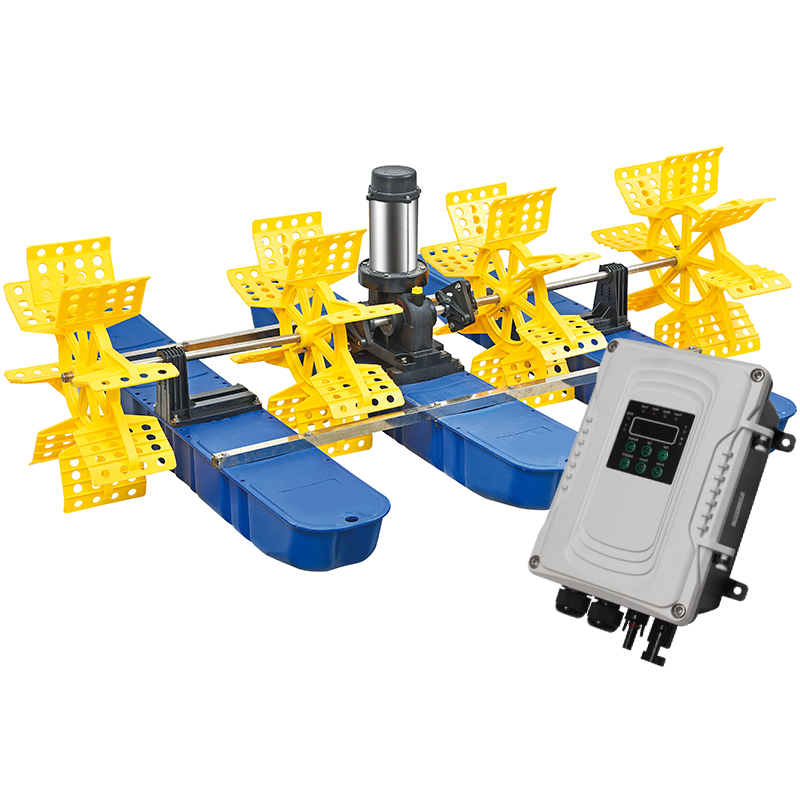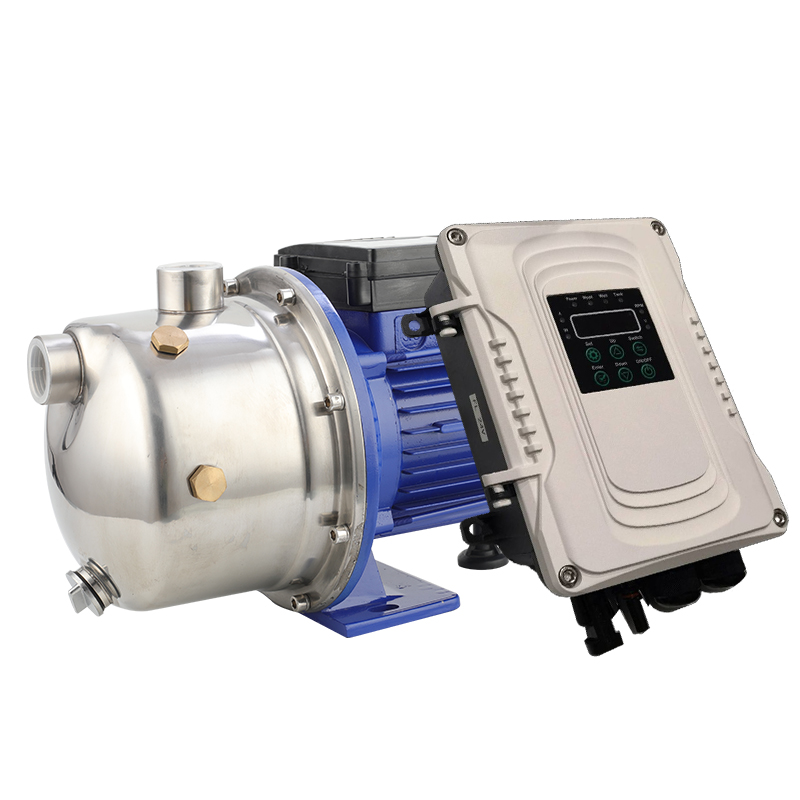
The answer depends on your specific application, energy source, and desired efficiency. Solar AC pumps are typically designed for high-power and deep-well applications where large volumes of water need to be moved over long distances. They use an inverter to convert DC electricity from solar panels into AC power for the motor. This setup is excellent for farms, irrigation systems, or industrial water supply where strong water flow is needed.
On the other hand, Solar DC pumps operate directly from solar panels without the need for an inverter. Because they avoid energy conversion losses, DC pumps provide higher efficiency and better energy savings, especially in smaller or remote installations. DC solar pumps start up quickly in low sunlight conditions, making them more suitable for household water supply, small farms, or livestock watering.
In general, if your project requires high capacity and distance, an AC solar pump is better. If you’re looking for energy efficiency, low maintenance, and cost-effectiveness, a DC solar pump is the smarter choice.
What Are the Disadvantages of DC Pumps?
Although Solar DC pumps have many benefits, they also come with some limitations. One main drawback is that DC systems are less compatible with existing electrical infrastructure. Since most traditional power systems and generators use AC, integrating DC pumps into hybrid systems can be more complex.
Another disadvantage is limited capacity. DC solar pumps are typically designed for small to medium water flow applications, so they might not be suitable for deep wells or large irrigation systems. In addition, DC pump controllers can be more expensive or harder to replace compared to standard AC components.
Maintenance and spare parts availability can also be a concern in some regions, especially where DC technology is less common. However, as solar DC pumps become more popular worldwide due to their higher efficiency and energy savings, these challenges are gradually decreasing.
So, while DC solar pumps are excellent for small-scale, energy-conscious setups, they may not be the ideal solution for high-demand or industrial pumping operations.
Energy Efficiency Comparison Between AC and DC Solar Pumps
When it comes to energy efficiency, Solar DC pumps generally outperform their AC counterparts. The main reason is that DC pumps operate directly on power produced by solar panels without requiring an inverter. Since every power conversion process results in some energy loss (usually 5–15%), DC systems deliver more efficient power utilization.
Solar AC pumps, by contrast, rely on inverters to convert DC from the solar panels to AC for the motor. Although modern inverters are becoming more efficient, they still consume part of the energy, reducing overall system efficiency.
However, AC pumps compensate with their ability to handle higher loads and provide consistent performance under various voltage conditions. This makes them the preferred choice when large water volumes or deep well lifting are necessary.
For those aiming to maximize energy savings and minimize long-term operational costs, DC solar pumps are more efficient and environmentally friendly. But for large-scale systems where reliability and power output matter more than small energy differences, AC solar pumps remain a solid investment.

Which Pump Offers Better Long-Term Value?
When considering the total cost of ownership, you need to evaluate not only the purchase price but also operational and maintenance expenses. Solar DC pumps often offer lower lifetime costs due to their higher efficiency and direct connection to solar panels. They require less equipment—no inverters—and therefore fewer potential points of failure. This reduces both setup costs and future maintenance expenses.
In contrast, Solar AC pumps might have higher upfront and operational costs because of the inverter and additional components required. However, they offer greater flexibility in terms of power sources. If your site occasionally relies on grid power or generators, an AC pump is easier to integrate into your hybrid system.
Ultimately, if you operate in an off-grid location and your water needs are moderate, a Solar DC pump delivers better long-term value. For larger agricultural or industrial applications where reliability and water flow volume are critical, Solar AC pumps remain the most practical investment.
Practical Applications: When to Choose Each Type
Choose Solar AC pumps if:
You need to lift water from deep wells or over long distances.
Your project requires high water volume and consistent flow.
You want the flexibility to connect to grid power or backup generators.
Choose Solar DC pumps if:
You prioritize energy savings and higher efficiency.
Your project is off-grid or in a remote area with strong sunlight.
You are running a household, small farm, or livestock watering system.
In short, both systems offer sustainable water pumping solutions powered by solar energy. The right choice depends on your pumping scale, energy setup, and budget.

Conclusion: Finding the Right Balance Between Power and Efficiency
In conclusion, both Solar AC pumps and Solar DC pumps play important roles in sustainable water pumping solutions. AC solar pumps are the powerhouse option, capable of handling high water demands and integrating easily with grid or generator backup systems. DC solar pumps, on the other hand, stand out for their higher efficiency, energy savings, and simplicity in off-grid operations.
For most small to medium users, Solar DC pumps offer the best combination of cost-efficiency and performance. For larger industrial or deep well operations, Solar AC pumps are still the more suitable choice.
Whichever system you choose, both contribute to cleaner energy usage and reduced operational costs. With proper sizing, installation, and maintenance, your solar water pump system will deliver reliable performance and long-term value.