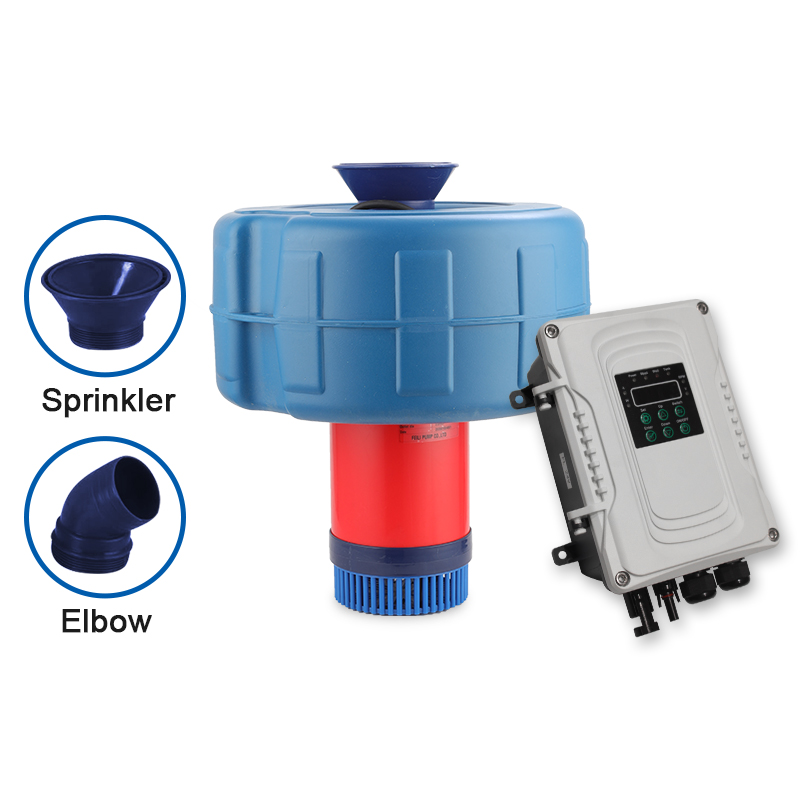
A solar pump drive, also known as a solar pump controller, is a specialized inverter that converts direct current (DC) from solar panels into alternating current (AC) to operate a solar water pump. It manages the variable nature of sunlight by adjusting the motor speed according to real-time solar input. This ensures consistent water output even during cloudy or partially shaded conditions.
More than a simple converter, the solar pump drive includes protection and monitoring features. It can automatically start and stop the pump depending on sunlight availability or water level signals, preventing dry running or overflow. Advanced models also allow integration with grid power or generators as backup energy sources.
For agricultural irrigation, livestock watering, and community water supply systems, the solar drive is the “brain” of the solar pumping setup—ensuring energy efficiency, low maintenance, and long service life of the pump and motor.
Can a Solar Pump Work Without a Controller?
Technically, a solar water pump might run directly from solar panels, but doing so is highly inefficient and unsafe. Without a controller, the system cannot regulate voltage or frequency, leading to frequent motor failures and inconsistent water output. When sunlight fluctuates—such as during clouds or shade—the unregulated voltage can cause the motor to stall or overheat.
A solar pump controller ensures smooth operation by adjusting the motor speed according to the solar input. It protects the system from low-voltage start-ups, overloads, and electrical surges. Many controllers also include diagnostic and troubleshooting features to simplify maintenance.
In short, running a solar pump without a controller not only reduces performance but also risks damaging the pump and solar panels. The controller is an essential safeguard for long-term reliability and efficiency.
What Are the Two Types of Solar Charge Controllers?
There are two primary types of solar charge controllers: PWM (Pulse Width Modulation) and MPPT (Maximum Power Point Tracking).
PWM Controllers are simpler and more affordable. They regulate voltage by rapidly switching the connection between solar panels and batteries or loads. While suitable for smaller systems, PWM controllers are less efficient because they cannot fully utilize the available solar energy under varying light conditions.
MPPT Controllers, on the other hand, are advanced and more efficient. They continuously track the optimal voltage and current point at which solar panels produce maximum power. By converting excess voltage into current, MPPT controllers can improve efficiency by 20–30% compared to PWM types.
For solar water pumps, MPPT controllers or drives are usually preferred. They provide stable performance, especially in areas with variable sunlight, ensuring that the pump operates optimally throughout the day.
What Is the Difference Between a Solar Pump Controller and VFD?
A solar pump controller and a VFD (Variable Frequency Drive) are similar in function—they both control the motor’s speed and power—but they differ in design and application.
A standard VFD is designed for grid-powered systems. It requires a stable AC power input and is not optimized for fluctuating DC voltage from solar panels. If used directly with solar panels, a VFD can fail to start or operate inefficiently.
A solar pump controller, by contrast, is engineered specifically for solar energy systems. It converts DC power from solar panels into AC and automatically adjusts for sunlight variations. Many solar drives can also hybridize with grid or generator inputs for continuous operation.
Additionally, solar pump controllers include built-in protections such as under-voltage, over-temperature, and dry-run protection—features often absent in traditional VFDs. They also simplify troubleshooting through smart diagnostics and LED or digital displays.
In essence, while both regulate motor performance, the solar pump controller is purpose-built for renewable energy systems, ensuring optimal performance in real-world solar pumping applications.