Incorrect submersible pump pressure causes weak water supply, equipment damage, and customer complaints; understanding correct pressure and pump head ensures stable deep well performance.
A submersible pump’s pressure depends on pump head, well depth, and application. Most deep well water pump systems operate between 30–60 PSI, while agricultural or industrial systems may require higher pressure to push water efficiently over long distances.
To select the right water pump, pressure must be evaluated from the well to the final water outlet.
What Should a Water Well Pressure Be?
Water well pressure refers to the pressure delivered by the water pump at the surface, usually measured in PSI (pounds per square inch). For most residential and light commercial deep well systems, the standard operating pressure range is 30–50 PSI or 40–60 PSI. This range provides sufficient force to push water through pipelines, storage tanks, and basic filtration systems without causing pipe stress or unstable flow.
However, well pressure is not determined by the pressure switch alone. The depth of the deep well, vertical lift, horizontal distance, pipe diameter, and total pump head all influence how much pressure is required. For example, a deep well of 100 meters requires significantly more pump head than a shallow well, even if the desired outlet pressure is the same. If the pressure is too low, end users experience weak flow, pressure drops during peak demand, and dissatisfaction. If pressure is too high, it can damage pipes, valves, and appliances.
For B2B buyers such as pump distributors and project contractors, matching well pressure to application is critical. Agricultural irrigation, industrial water supply, and multi-story buildings often need higher pressure to push water over long distances. Proper pressure design improves system efficiency, reduces maintenance, and extends water pump service life.
What Pressure Should a Submersible Pump Run At?
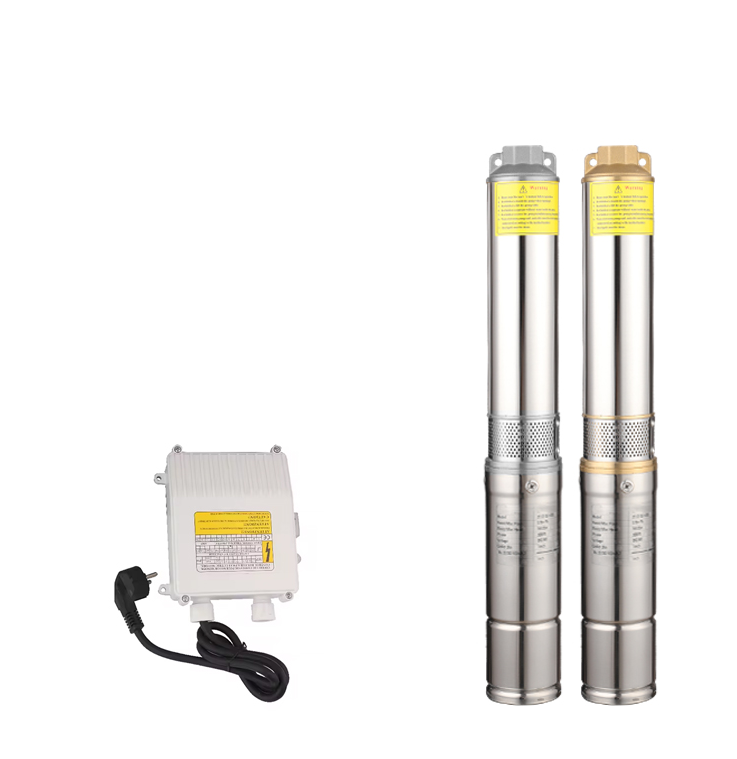
A submersible pump does not operate at a single fixed pressure; instead, it generates pressure based on pump head, motor power, and system resistance. In most deep well applications, a submersible water pump is designed to run efficiently within a defined pressure range that matches the system curve. Typically, submersible pumps used for domestic or small commercial wells run between 30–60 PSI at the outlet after pressure regulation.
The actual pressure generated inside the pump is directly related to pump head. As a rule of thumb, every 10 meters of vertical lift equals approximately 1 bar or 14.5 PSI. Therefore, a pump lifting water from a 100-meter deep well already generates around 145 PSI internally before accounting for friction loss and horizontal distance. This is why selecting the correct pump head is far more important than focusing on PSI alone.
For B2B buyers serving overseas markets, misunderstanding operating pressure is a common sourcing mistake. A pump that runs constantly at maximum pressure wastes energy and shortens motor life. On the other hand, an undersized pump cannot push water reliably during peak demand. Professional submersible pump design balances head, flow rate, and operating pressure to achieve stable performance, especially in deep well and industrial water pump systems.

How Far Can a 1 HP Submersible Pump Push Water?
The distance a 1 HP submersible pump can push water depends on pump head, pipe size, and system design—not just motor power. In vertical terms, a typical 1 HP deep well submersible water pump can achieve a maximum pump head of approximately 60–100 meters, depending on model and efficiency. This means it can lift water from deep wells within that depth range under ideal conditions.
Horizontally, pushing water is less demanding than lifting it vertically. Once water reaches the surface, a 1 HP pump can push water hundreds of meters if pipe friction is controlled through proper diameter selection. Narrow pipes, multiple bends, and valves increase resistance and reduce effective distance. This is why system layout must be considered alongside pump specifications.
For agricultural irrigation or rural water supply projects, a 1 HP pump is often used for small-scale distribution where moderate flow and distance are required. However, for larger farms, multi-story buildings, or long-distance pipelines, higher horsepower or multi-stage deep well pumps are more suitable. For B2B buyers, clearly understanding how far a pump can push water helps avoid underperforming systems, costly replacements, and end-user complaints. Matching horsepower to pump head ensures reliable and predictable water pump performance.
Correct submersible pump pressure depends on pump head, well depth, and system design to reliably push water from deep wells.