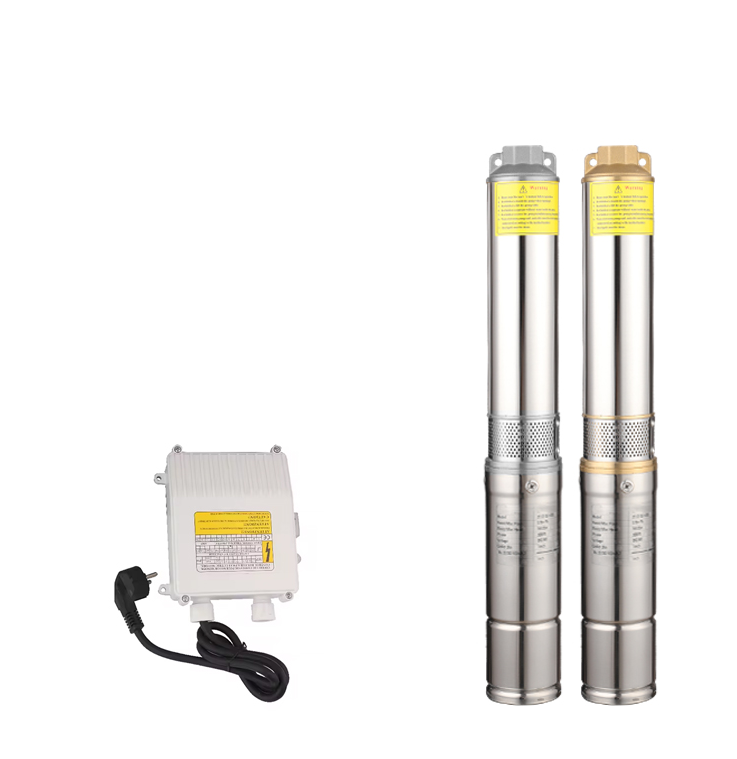
When your shallow well fails to deliver steady water, poor pump function can disrupt your work and waste resources. Improper water pump selection may cause short lifespan and costly downtime—but understanding the right pump for your water depth solves it all.
A submersible pump can technically operate in a shallow well, but its performance depends on the water depth, pump design, and installation method. Choosing the correct water pump type ensures efficient water flow, stable operation, and extended pump life for your shallow well application.
Keep reading to discover which pump truly fits your shallow well needs and how to optimize water pump efficiency.
Can You Put a Submersible Pump in a Shallow Well?
Yes, you can use a submersible pump in a shallow well, but it requires careful attention to water depth and pump function. Submersible pumps are typically designed for deep wells, where the motor and impeller remain fully submerged under water. However, if your shallow well maintains a consistent water level of at least 10–25 feet, a submersible pump can still operate effectively.
The main challenge lies in ensuring the motor is completely underwater during operation. When the water level drops too low, the pump may draw in air, causing cavitation, overheating, and premature failure. Additionally, installation in a shallow well often requires customized piping and safety switches to prevent dry running.
For industrial or agricultural users, a high-quality submersible pump offers the advantage of quiet performance, minimal maintenance, and efficient water transfer—even in limited water depth conditions. However, for very shallow wells, other pump types may perform better.
What Type of Pump Is Best for a Shallow Well?
For wells less than 25 feet deep, a centrifugal pump or a jet pump is generally the best choice. These pumps are designed for shallow well applications and maintain excellent pump function even when the water depth is limited.
A centrifugal pump uses an impeller to create suction, pulling water from the well and delivering it efficiently to your system. Its simple design, easy maintenance, and low cost make it ideal for residential, agricultural, or small industrial water supply systems.
On the other hand, a shallow well jet pump uses a combination of suction and pressure to lift water from shallow sources. Jet pumps are particularly suitable when water levels fluctuate, as they can adapt to varying depths without performance loss.
If the shallow well is consistently deeper than 20 feet but not more than 40 feet, a convertible jet pump can be an excellent hybrid option. It provides higher lift than a standard jet pump while maintaining energy efficiency.
When choosing the best water pump for your shallow well, always assess your water depth, required flow rate, and installation environment.

What Is the Minimum Water Depth for a Submersible Pump?
The minimum water depth for a submersible pump typically depends on the model, but most require at least 10 to 15 feet of submersion for proper cooling and operation. Unlike surface pumps, submersible pumps rely on the surrounding water for heat dissipation. Insufficient water depth may lead to overheating and failure.
For example, in a shallow well of less than 10 feet, the pump motor may not remain fully submerged at all times, especially during dry seasons. This causes unstable pump function, poor suction, and higher maintenance costs.
When installing a submersible water pump, it’s essential to calculate both the static water level (the normal resting water depth) and the drawdown level (the depth after pumping). To maintain efficiency, the pump should remain submerged even at the lowest drawdown point.
In situations where the water depth is too low for submersion, using a surface centrifugal pump or jet pump is a safer, more reliable choice. Always consult your pump manufacturer for recommended installation depths and proper cooling guidelines.
Summary
Choosing the right water pump for your shallow well depends on water depth and desired pump function—submersible or surface, efficiency is key.