Can I Run a Water Pump Straight from a Solar Panel?
Technically, no, you cannot run a standard water pump directly from solar panels. Solar panels produce variable DC voltage depending on sunlight intensity, which fluctuates throughout the day. A pump requires a stable and regulated power supply to start and operate safely.
This is why a solar controller (also called a pump controller or MPPT controller) is essential. The controller manages voltage and current output, ensuring that the solar water pump receives consistent power even when solar radiation changes.
If your pump is AC type, an inverter must also be used to convert DC electricity from the panels into AC power that matches the pump’s voltage and frequency. For DC solar pumps, the controller alone is often sufficient, since the pump runs directly on DC current.
In summary, solar panels alone are not enough. A solar controller or inverter is mandatory to protect the pump motor, stabilize performance, and extend the lifespan of your borehole pump or deep well pump.
What Is the 33% Rule in Solar Panels?
The 33% rule in solar panel design ensures your system can deliver reliable performance even during fluctuating sunlight conditions. It means your solar array capacity should be around 33% higher than the total power your pump requires to operate efficiently.
For example, if your solar water pump needs 900 watts, your solar panels should ideally produce about 1,200 watts. This oversizing compensates for:
Shading or cloudy weather
Temperature-related power loss
Energy loss in cables and controllers
Applying the 33% rule ensures stable operation during non-peak sunlight hours. This principle is especially important for deep well pumps and borehole pumps, which draw water from greater depths and require consistent power to maintain water pressure.
Without this margin, your system may experience frequent pump stoppages, poor flow rates, or even equipment damage due to low voltage. Thus, oversizing your panels improves efficiency and ensures smooth solar-only operation all day long.
How Can I Run My Well Pump Without Electricity?
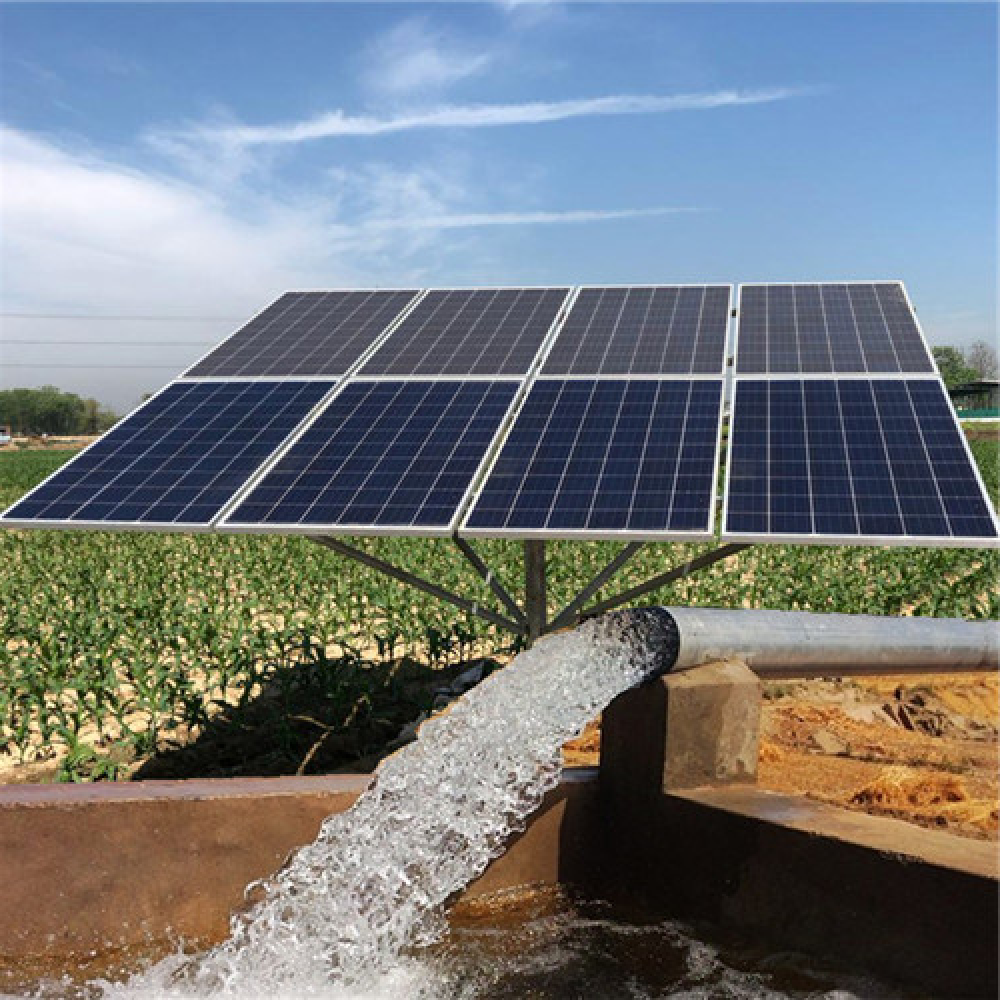
Running a well pump without grid electricity is now easy and reliable with a properly configured solar water pump system. Here’s how it works:
Solar panels capture sunlight and generate DC electricity.
The solar controller stabilizes voltage and prevents sudden current spikes that can damage the motor.
If using an AC pump, the inverter converts DC to AC power at the correct voltage and frequency.
The borehole pump or deep well pump then draws water to the surface for irrigation, domestic, or livestock use.
This setup operates entirely on solar power, making it perfect for remote areas, farms, or regions with frequent power outages. For round-the-clock supply, you can also add a battery backup or a storage tank to hold water pumped during daylight hours.
By replacing grid electricity with solar energy, you achieve long-term energy savings, environmental sustainability, and independence from utility power—without sacrificing performance or reliability.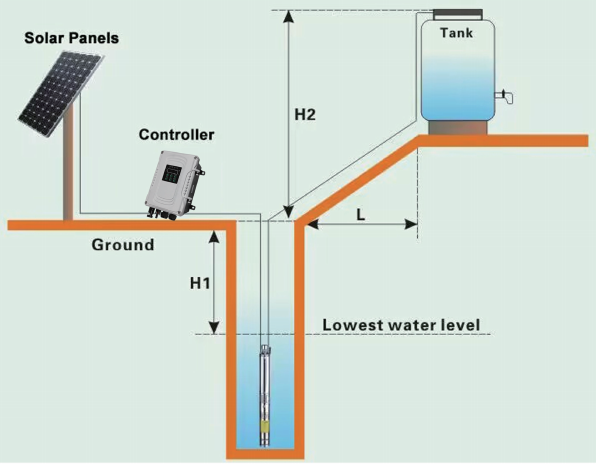
How to Run a Water Pump with Solar?
Running a water pump with solar requires careful planning and proper system components. Below is a simple step-by-step guide to setting up a fully solar-powered pump system:
Determine Pump Requirements
Identify your pump’s type (AC or DC), horsepower, and daily water demand. A 1HP borehole pump usually consumes about 750 watts.Size Your Solar Panel Array
Apply the 33% rule. For a 750-watt pump, use at least 1,000 watts of solar panels to ensure stable output under variable sunlight.Choose Between Solar AC and DC Pumps
Solar DC pumps: More efficient and directly compatible with solar power systems using a controller.
Solar AC pumps: Use an inverter to convert DC to AC, allowing compatibility with existing household or irrigation systems.
Install a Solar Controller and Inverter
The controller optimizes power flow, preventing voltage drops and overloads. The inverter (for AC pumps) ensures correct voltage and frequency output for smooth operation.Add Optional Components
Battery bank: Stores excess power for night operation.
Water tank: Stores water pumped during sunny hours for later use.
Protection systems: Include fuses, breakers, and surge arrestors for safety.
Monitor and Maintain
Regularly clean the solar panels, check electrical connections, and monitor voltage output. Preventive maintenance maximizes performance and lifespan.
When properly installed, this system can fully power deep well pumps, centrifugal pumps, or borehole pumps with no grid electricity—offering a reliable and sustainable water supply.
Why Controllers and Inverters Are Essential
Many people mistakenly assume solar panels alone can power a pump. However, controllers and inverters are the most critical parts of any solar water pump system.
The solar controller manages voltage, ensuring the pump motor receives stable power and protecting against voltage surges or drops that can cause overheating or stalling.
The inverter is essential for solar AC pumps, converting DC power into usable AC energy.
Without these devices, voltage fluctuations could damage your deep well pump or significantly reduce its lifespan.
Controllers also allow advanced features such as soft start, dry-run protection, and automatic shutdown, all of which prevent mechanical damage and water waste. In short, these components make the difference between a functioning system and a failed one.

Benefits of Running a Pump Solely on Solar Energy
Adopting a solar-only water pumping system offers numerous benefits for both domestic and agricultural users:
Energy independence: No reliance on grid power or fuel generators.
Lower operating costs: Free energy from the sun after initial setup.
Environmentally friendly: Zero carbon emissions and quiet operation.
Low maintenance: Fewer moving parts mean less wear and longer life.
Versatility: Works with borehole pumps, deep well pumps, and solar AC&DC pumps alike.
For rural communities or water-intensive businesses, solar-powered pumping is a cost-effective, reliable, and sustainable long-term solution.
Conclusion: Power Your Pump the Smart Way
In summary, while solar panels are the foundation of any solar-powered water system, they cannot directly drive a water pump. A properly designed solar water pump system must include a controller and, if necessary, an inverter to ensure safe, efficient, and consistent operation.
By combining these components and applying the 33% rule, you can run your borehole pump or deep well pump entirely on solar power—eliminating dependence on grid electricity and achieving long-term energy savings.
Investing in a well-designed solar-only pumping system isn’t just practical—it’s a step toward sustainable water management for both domestic and industrial applications.