What Are the Disadvantages of a Solar Water Pump?
While solar water pumps provide impressive energy savings and independence from the grid, they also come with some limitations. The primary disadvantage is their dependence on sunlight. During cloudy days or at night, energy production drops, which can reduce pumping performance unless the system is paired with batteries or a hybrid backup.
The initial investment can also be relatively high, as the cost of solar panels, controllers, and installation can exceed that of conventional pumps. However, this is often offset by long-term savings in energy and maintenance costs.
Another limitation involves location. Areas with limited sunshine may not produce enough energy to run large pumps efficiently. Similarly, dust or debris on solar panels can lower system efficiency and require periodic cleaning.
Lastly, in very deep wells or high-lift applications, the system may need additional solar panels or a larger submersible borehole pump, which increases cost and installation complexity. Despite these drawbacks, solar pumps remain one of the most cost-effective and sustainable water solutions available today.
How Does a Solar Water Pump Work?
A solar water pump operates by converting sunlight into usable electrical energy to power a motor that drives the pumping mechanism. The system begins with solar panels, which capture sunlight through photovoltaic (PV) cells. These cells convert solar radiation into direct current (DC) electricity.
This electricity is either used directly to power a DC pump or sent through an inverter that converts it to alternating current (AC) for running an AC motor. The motor then drives a centrifugal pump or submersible borehole pump, depending on the water source.
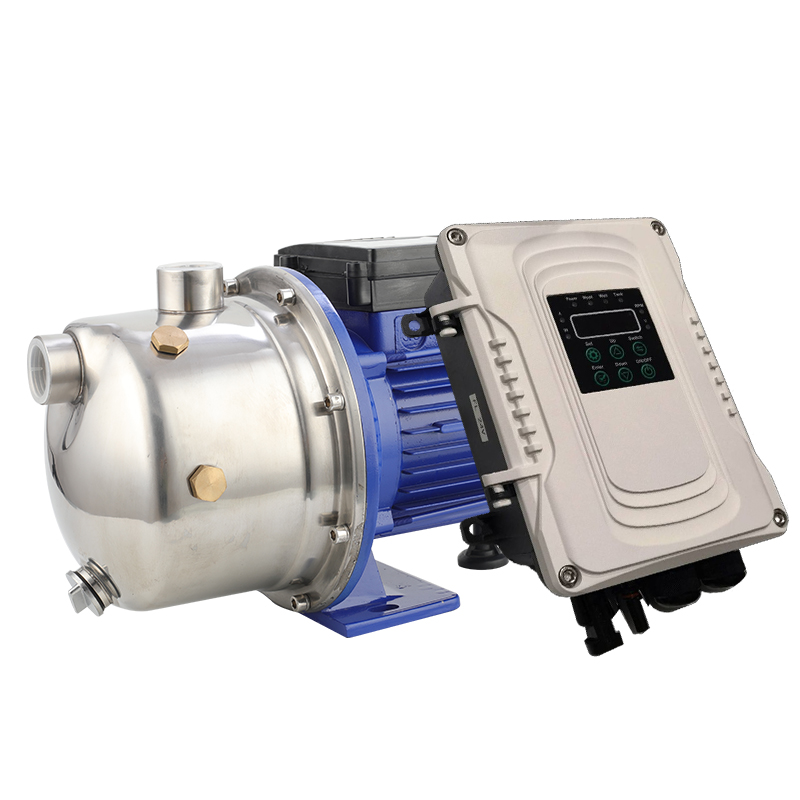
A centrifugal pump uses a rotating impeller to create pressure that pushes water upward, making it suitable for surface water sources like rivers or tanks. A submersible borehole pump, by contrast, is installed deep underground to lift water from wells. It’s sealed and fully submerged, capable of handling high vertical lift with excellent efficiency.
Controllers regulate the power flow between solar panels and the pump, protecting the system from voltage fluctuations or low sunlight. Advanced systems even include sensors that automatically adjust pump speed based on sunlight intensity.
In simple terms, solar pumps transform free solar energy into a continuous and sustainable water supply—perfect for agriculture, irrigation, livestock, and remote applications.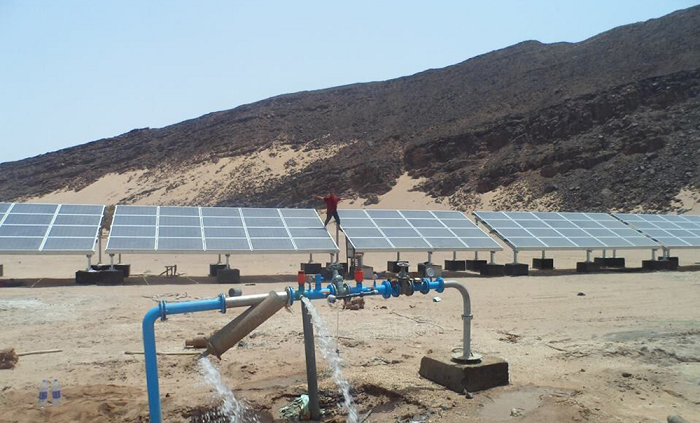
How Many Solar Panels Do I Need to Run a Water Pump?
The number of solar panels required to power a solar water pump depends on several factors: pump capacity (measured in watts or horsepower), system voltage, daily sunlight availability, and the total dynamic head (the vertical and horizontal distance the water must be pumped).
As a general rule, a 1 horsepower (HP) pump requires approximately 750 watts of power. Taking into account system losses and efficiency, you’ll need around 1,000 to 1,200 watts of solar generation capacity—roughly four to six panels rated at 250–300 watts each.
For submersible borehole pumps used in deep wells, more panels may be required to compensate for the extra lifting power needed. Conversely, smaller systems using centrifugal pumps for surface water applications might operate efficiently with only two or three panels.
The number of panels also depends on regional sunlight hours. In areas with high solar radiation (like Southeast Asia, Africa, or the Middle East), fewer panels may be sufficient. In lower sunlight regions, additional panels ensure consistent water flow.
Proper system sizing by a professional supplier ensures stable operation, avoids overloading the pump, and maximizes energy efficiency—delivering the best balance of performance and cost.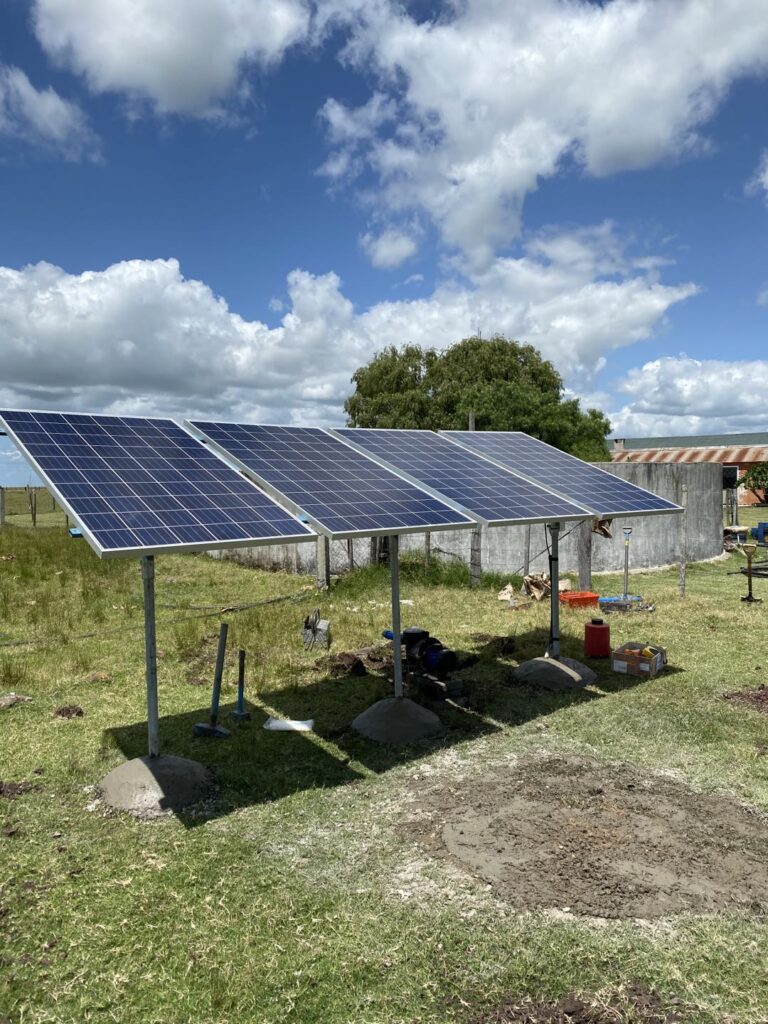
How Deep Can a Solar Water Pump Draw Water From?
The depth from which a solar water pump can draw water depends on the type of pump, power capacity, and total system configuration. In general, submersible borehole pumps are designed for deep water extraction, capable of lifting water from depths ranging between 50 and 250 meters.
A standard centrifugal pump, however, works best for shallower applications—usually up to 7 to 10 meters of suction depth—because it relies on atmospheric pressure to pull water. For deeper wells or boreholes, submersible pumps are the preferred solution since they push water upward rather than pulling it, making them more energy-efficient for high-head operations.
System designers calculate total dynamic head (TDH) — which includes vertical lift, friction loss in the pipeline, and discharge distance — to determine the ideal pump capacity. As the depth increases, more solar panels may be needed to generate the additional energy required.
With modern solar technology, high-performance submersible borehole pumps can now deliver strong water flow from very deep sources, meeting the demands of agricultural irrigation, livestock watering, and rural water supply projects even in off-grid locations.
Advantages of Using Solar Water Pumps
Beyond sustainability, solar water pumps offer numerous practical advantages. They operate silently, require minimal maintenance, and deliver consistent performance without fuel costs. Once installed, operating expenses are nearly zero, making them ideal for long-term use.
They provide energy independence, especially in remote or rural regions where grid power is unavailable or unreliable. Farmers and businesses benefit from predictable water access and freedom from fluctuating fuel prices.
The system’s scalability is another major benefit. Users can start small and expand their solar array or pump size as their water needs grow. Whether using a centrifugal pump for surface irrigation or a submersible borehole pump for deep wells, solar technology ensures flexibility, efficiency, and environmental responsibility.
Conclusion: Reliable Water Supply Through Solar Technology
In conclusion, solar water pumps work by converting sunlight into electricity via solar panels to power a centrifugal pump or submersible borehole pump. This clean energy system lifts or moves water efficiently without relying on grid electricity or fossil fuels.
While there are some limitations—such as weather dependence and initial cost—the long-term advantages are substantial. Solar water pumps deliver energy savings, reliability, and low maintenance, making them a smart investment for agriculture, industry, and rural communities.
By harnessing solar power, users gain a self-sufficient and eco-friendly water supply system that reduces operational costs and supports sustainable development. With ongoing advancements in solar technology, these systems continue to redefine how we access and manage water globally.